
Clinical Library · Sleep & Calm
Natural ways to deal with sleep anxiety
Sleep anxiety is what happens when the moment you switch the light off, the brain switches on. Tomorrow's meetings, half-remembered arguments, that email you didn't send. This is a nervous-system problem, not a willpower problem - and there is a short list of things that actually shift it.
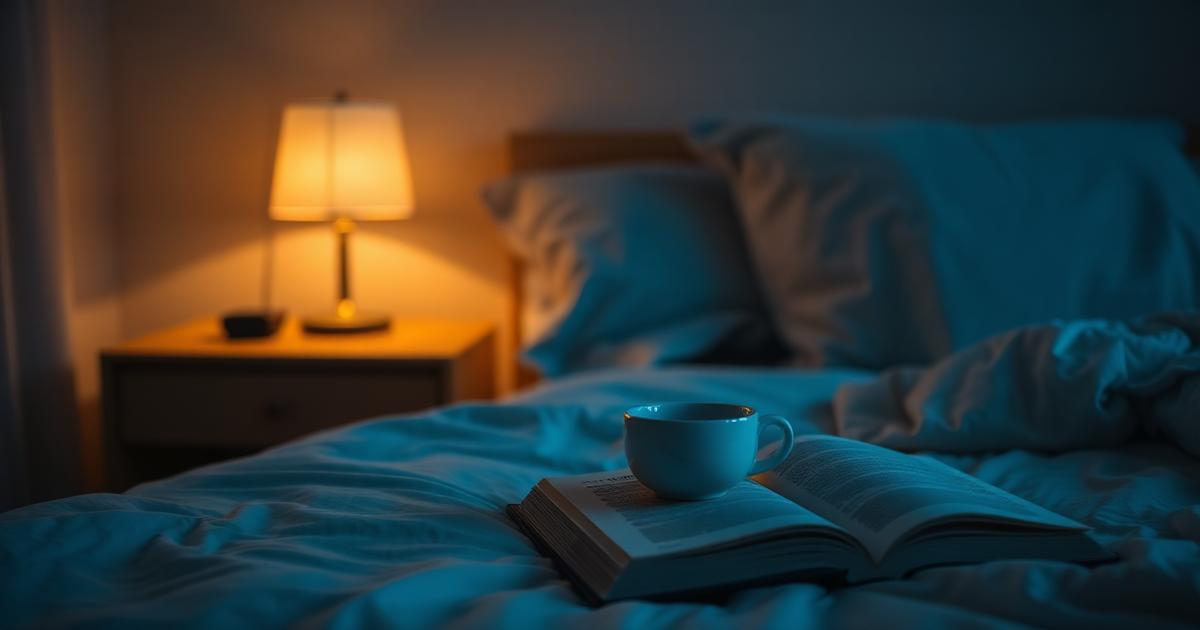
What sleep anxiety actually is
Falling asleep needs the parasympathetic (rest-and-digest) branch of the nervous system to take over. In sleep anxiety, cortisol and adrenaline are still elevated at 11 PM, the sympathetic branch is stuck in "on". The fix isn't more willpower; it's giving the body the signals and nutrients it needs to switch modes.
The evidence-based natural stack
Magnesium bisglycinate (200-300 mg, 1 hr before bed)
GABA cofactor + lowers cortisol
The single most-studied mineral for sleep and anxiety. Bisglycinate is calming without the laxative effect of citrate or oxide. Glycine itself is pro-sleep.
L-theanine (100-200 mg after dinner)
Alpha-wave calm without sedation
The amino acid in green tea. Raises alpha brain waves that 'settled but awake' feeling which primes the transition to sleep.
Ashwagandha (300-600 mg KSM-66)
Adaptogen, lowers evening cortisol
Multiple Indian RCTs show reduced perceived stress and improved sleep quality at 8 weeks. Best taken at dinner, not bedtime.
Glycine (3 g at bedtime)
Body temperature drop = deeper sleep
Slightly cools core body temperature, which mimics what naturally happens as you fall asleep. Studied in sleep-onset insomnia in Japan.
Chamomile (a strong cup, 30 min before bed)
Apigenin, mild GABAergic
Not a knockout, but a gentle nudge that pairs well with breathwork.
The 90-minute wind-down that actually works
- T-90 min: Last coffee/tea was >8 hours ago. Dim overhead lights; switch to warm bedside lamps.
- T-60 min: Screens off (or blue-light filter + brightness at minimum). Magnesium bisglycinate + a small square of dark chocolate is the ritual.
- T-30 min: Warm shower, the post-shower core-temperature drop is a strong sleep signal. Write down tomorrow's top 3 tasks so the brain stops looping them.
- T-10 min: In bed, 4-7-8 breathing for 4 rounds. Inhale 4, hold 7, exhale 8. Activates the vagus nerve, drops heart rate.
What to stop doing
- Doomscrolling in bed. Each swipe is a fresh dopamine ping , the opposite of a downshifting nervous system.
- "Just one" evening whisky. Alcohol fragments deep sleep even at one drink; you'll wake at 3 AM more anxious.
- Late workouts (after 8 PM). Cortisol stays elevated for hours. Morning or afternoon training is far better for sleep-anxious people.
- Checking the clock at 2 AM. Turn the bedside clock away. Every check is another cortisol spike.
Mag Absorb Pro, the sleep-anxiety mineral, done right
Four absorbable magnesium forms, bisglycinate for GABA support, Aquamin® marine minerals, chloride and aspartate at doses targeted at nervous-system calm and muscle relaxation. Take one 60 minutes before bed with warm water.
The formulation behind this article
Mag Absorb Pro
Four magnesium forms for sleep, muscle recovery & calm
Aquamin® Marine Magnesium
100 mgForm used: Aquamin® marine-derived multi-mineral magnesium (branded, standardised extract)
Multi-mineral magnesium from red marine algae (Lithothamnion sp.), supports sustained mineral delivery for joint comfort, bone structure and recovery.
Magnesium Bisglycinate
200 mgForm used: Liposomal magnesium bisglycinate (fully reacted chelate, phospholipid-encapsulated)
Highly bioavailable, gentle-on-gut chelate, the gold standard for relaxation, sleep onset and stress recovery.
Food supplement, not a medicine. Ingredient research describes individual actives and their delivery forms, not finished-product outcomes. Consult a clinician if pregnant, lactating or on prescription medication.
References
Every in-text claim in this article is credited to the original researchers and peer-reviewed journal below. Key studies cited: Boyle NB et al. (2017, Nutrients); Abbasi B et al. (2012, Journal of Research in Medical Sciences); de Baaij JH et al. (2015, Physiological Reviews).
- [1]
The effects of magnesium supplementation on subjective anxiety and stress, a systematic review
- Author(s)
- Boyle NB, Lawton C, Dye L
- Year
- 2017
- Journal
- Nutrients
- Citation
- Boyle NB, Lawton C, Dye L. The effects of magnesium supplementation on subjective anxiety and stress, a systematic review. Nutrients. 2017;9(5):429.
- PubMed
- https://pubmed.ncbi.nlm.nih.gov/28445426/
- [2]
The effect of magnesium supplementation on primary insomnia in elderly: A double-blind placebo-controlled clinical trial
- Author(s)
- Abbasi B, Kimiagar M, Sadeghniiat K, Shirazi MM, Hedayati M, Rashidkhani B
- Year
- 2012
- Journal
- Journal of Research in Medical Sciences
- Citation
- Abbasi B, Kimiagar M, Sadeghniiat K, et al. The effect of magnesium supplementation on primary insomnia in elderly: A double-blind placebo-controlled clinical trial. J Res Med Sci. 2012;17(12):1161-1169.
- PubMed
- https://pubmed.ncbi.nlm.nih.gov/23853635/
- [3]
Magnesium in man: implications for health and disease
- Author(s)
- de Baaij JH, Hoenderop JG, Bindels RJ
- Year
- 2015
- Journal
- Physiological Reviews
- Citation
- de Baaij JH, Hoenderop JG, Bindels RJ. Magnesium in man: implications for health and disease. Physiol Rev. 2015;95(1):1-46.
- PubMed
- https://pubmed.ncbi.nlm.nih.gov/25540137/
Citations follow AMA format. TruWe does not own or endorse the linked journals; all rights and credit remain with the original authors and their respective publishers.
Educational only. Persistent insomnia, panic attacks or intrusive thoughts need a clinician, natural remedies complement care, they don't replace it.