
Clinical Library · Minerals
Magnesium Benefits: Forms, Foods & Dosage Guide
Magnesium runs more than 300 enzyme reactions, from making energy (ATP) to relaxing muscles, calming the nervous system and locking in deep sleep. Yet roughly half of Indian adults consume less than the recommended daily intake. Here's what the form, food sources and dose actually look like in 2026.

What magnesium does in the body
- Energy production. Every molecule of ATP, the cell's energy currency, must be bound to a magnesium ion to be biologically active.
- Muscle relaxation. Magnesium competes with calcium at the muscle fibre; low magnesium = cramps, twitches and tight shoulders after workouts.
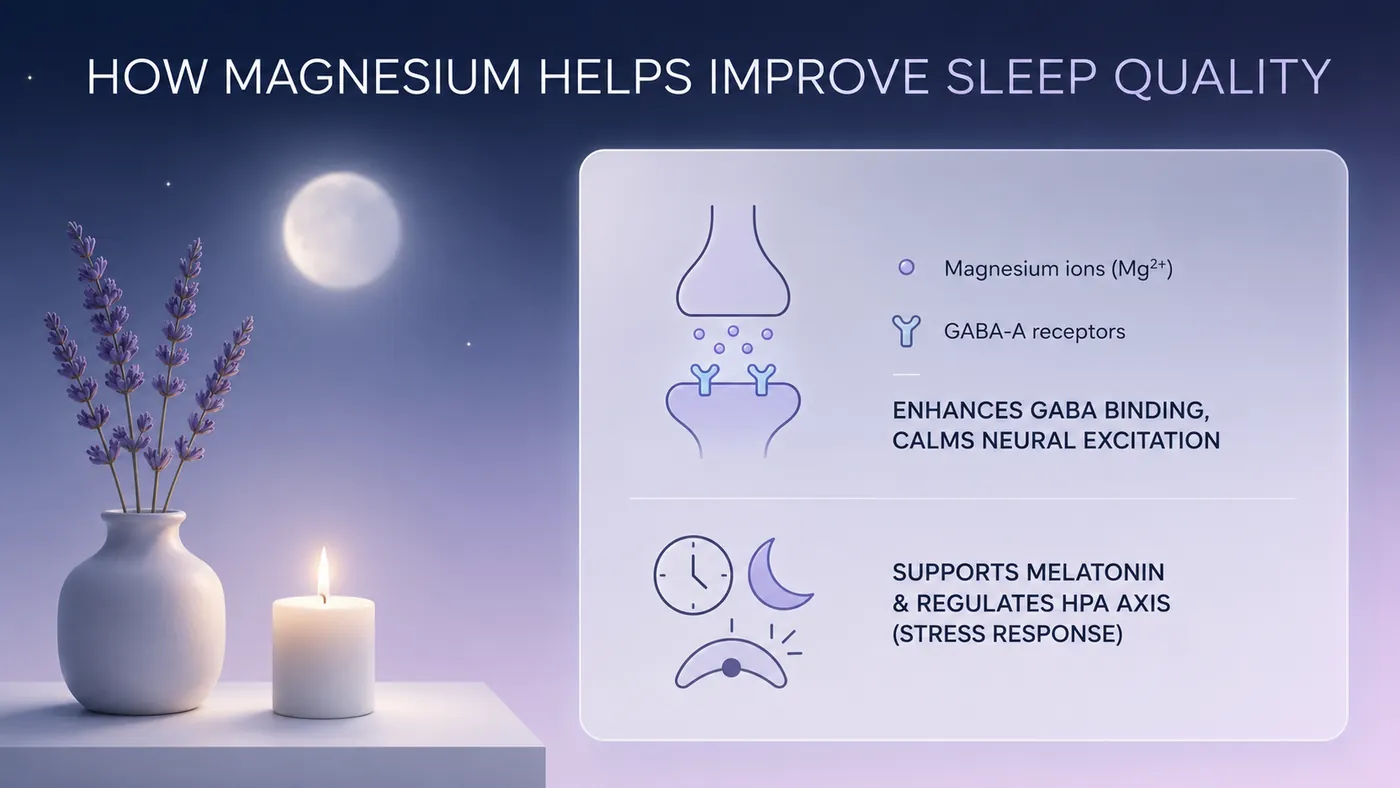
- Sleep & nervous system. It regulates GABA, the calming neurotransmitter, and quiets the HPA stress axis at night.
- Blood sugar & insulin sensitivity. Magnesium is a required cofactor for the insulin receptor's tyrosine kinase activity.
- Bone & cardiovascular health. 60% of body magnesium sits in bone; it also helps maintain normal blood pressure and heart rhythm.
Foods high in magnesium
Aim to combine 2-3 of these every day. The numbers below are elemental magnesium per 100 g (USDA FoodData Central, 2024):
| Food | Magnesium (per 100 g) |
|---|---|
| Pumpkin seeds (roasted) | 550 mg |
| Chia seeds | 335 mg |
| Almonds | 270 mg |
| Cashews | 260 mg |
| Dark chocolate (70-85%) | 228 mg |
| Peanuts | 168 mg |
| Black beans (cooked) | 70 mg |
| Spinach (cooked) | 87 mg |
| Edamame | 64 mg |
| Avocado | 29 mg |
| Banana | 27 mg |
Even a "good" Indian thali dal, sabzi, two rotis, salad delivers ~180-220 mg. The RDA is 400 mg for men and 310 mg for women. The gap is real.
The best magnesium supplement: form matters more than dose
"500 mg of magnesium" on a label can mean anything from cheap oxide (4% absorbed) to chelated bisglycinate (80%+ absorbed). Here's how the common forms stack up.
Magnesium Bisglycinate
Sleep, anxiety, PMS, gentle on the gut
Chelated to two glycine molecules, glycine itself is calming, so it doubles down on sleep quality.
Aquamin® (marine multi-mineral)
Bone, joint, alkalising mineral matrix
Sourced from red algae (Lithothamnion). Delivers magnesium alongside 72 trace minerals in a honeycomb structure.
Magnesium Chloride
Rapid absorption, muscle recovery
One of the most bioavailable inorganic forms. Useful for athletes and post-workout cramps.
Magnesium Aspartate
Energy, fatigue, exercise performance
Aspartic acid shuttles magnesium into mitochondria, pairs naturally with the energy pathway.
Magnesium Gluconate
Daily maintenance, gentle on digestion
Highest oral bioavailability among the simple salts in head-to-head studies.
Magnesium Oxide / Sulfate
Avoid for daily use
4-10% absorption. Mostly acts as a laxative. Cheap fillers in many drugstore brands.
How much magnesium per day?
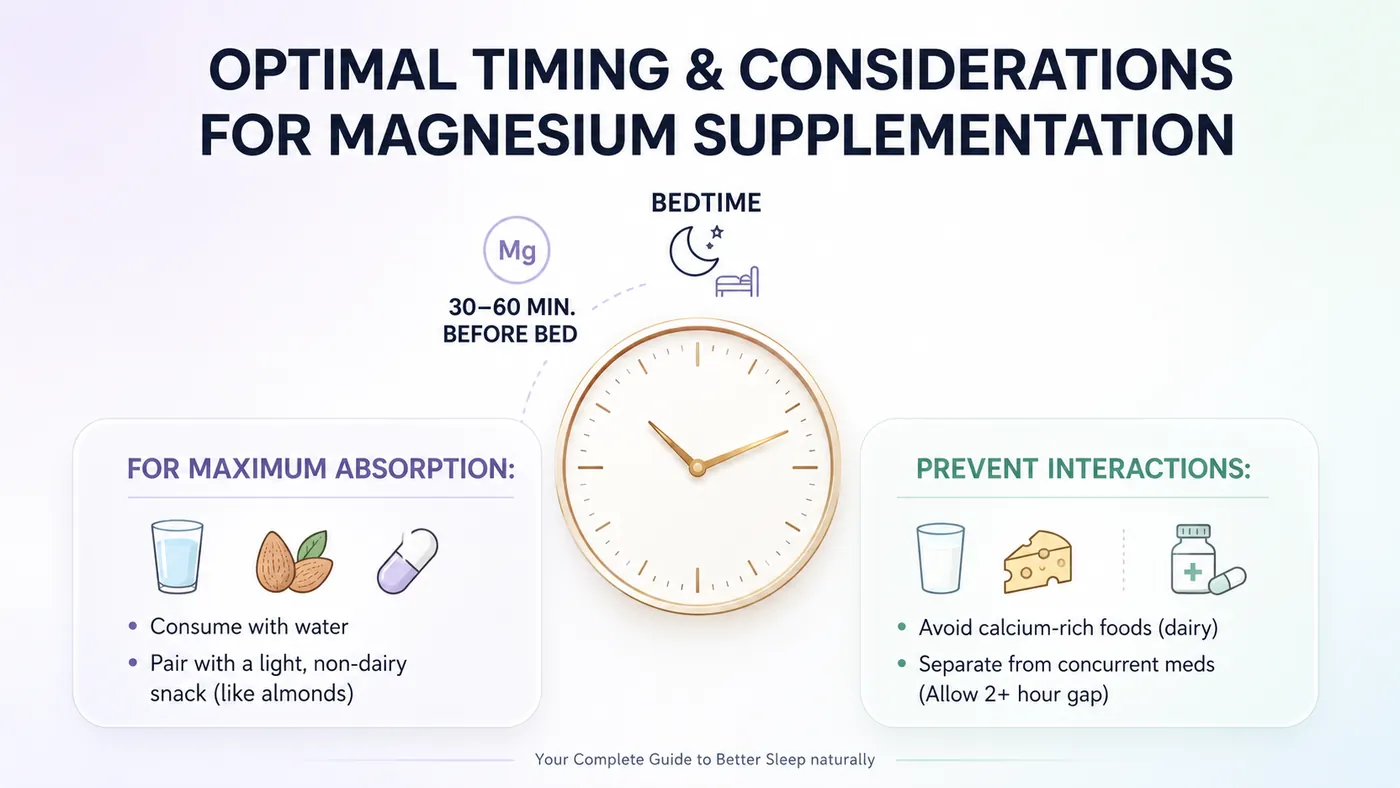
ICMR and the US NIH converge on ~310 mg/day for women and ~400 mg/day for men. If you train hard, sweat in tropical heat, drink coffee or alcohol, or take a PPI for acidity , you're losing more and your needs go up. A practical supplement window is 200-400 mg of elemental magnesium per day, split across the day if possible, with the larger dose 60-90 minutes before bed.
Mag Absorb Pro, four forms, one stack
Most brands ship a single cheap salt. Mag Absorb Pro combines Aquamin®, magnesium chloride, magnesium aspartate and magnesium gluconate so every transport pathway is covered, bone matrix, mitochondrial energy, muscle relaxation and daily maintenance, at research-backed doses.
FAQs
Can I just eat more spinach?
You can close part of the gap, but oxalates in spinach and phytates in whole grains block 30-50% of the magnesium. Pumpkin seeds, cashews and dark chocolate are more bioavailable food sources.
When should I take magnesium?
For sleep, 60-90 minutes before bed with a small fat (a few nuts works). For muscle recovery, within 30 minutes of training.
Is magnesium safe daily?
Yes, up to the tolerable upper intake of 350 mg/day from supplements (food sources aren't capped). Going higher with oxide/sulfate can cause loose stools.
The formulation behind this article
Mag Absorb Pro
Four magnesium forms for sleep, muscle recovery & calm
Aquamin® Marine Magnesium
100 mgForm used: Aquamin® marine-derived multi-mineral magnesium (branded, standardised extract)
Multi-mineral magnesium from red marine algae (Lithothamnion sp.), supports sustained mineral delivery for joint comfort, bone structure and recovery.
Magnesium Bisglycinate
200 mgForm used: Liposomal magnesium bisglycinate (fully reacted chelate, phospholipid-encapsulated)
Highly bioavailable, gentle-on-gut chelate, the gold standard for relaxation, sleep onset and stress recovery.
Food supplement, not a medicine. Ingredient research describes individual actives and their delivery forms, not finished-product outcomes. Consult a clinician if pregnant, lactating or on prescription medication.
References
Every in-text claim in this article is credited to the original researchers and peer-reviewed journal below. Key studies cited: de Baaij JH et al. (2015, Physiological Reviews); Rosanoff A et al. (2012, Nutrition Reviews); Barbagallo M et al. (2015, World Journal of Diabetes); DiNicolantonio JJ et al. (2018, Open Heart).
- [1]
Magnesium in man: implications for health and disease
- Author(s)
- de Baaij JH, Hoenderop JG, Bindels RJ
- Year
- 2015
- Journal
- Physiological Reviews
- Citation
- de Baaij JH, Hoenderop JG, Bindels RJ. Magnesium in man: implications for health and disease. Physiol Rev. 2015;95(1):1-46.
- PubMed
- https://pubmed.ncbi.nlm.nih.gov/25540137/
- [2]
Suboptimal magnesium status in the United States: are the health consequences underestimated?
- Author(s)
- Rosanoff A, Weaver CM, Rude RK
- Year
- 2012
- Journal
- Nutrition Reviews
- Citation
- Rosanoff A, Weaver CM, Rude RK. Suboptimal magnesium status in the United States: are the health consequences underestimated? Nutr Rev. 2012;70(3):153-164.
- PubMed
- https://pubmed.ncbi.nlm.nih.gov/22364157/
- [3]
Magnesium and type 2 diabetes
- Author(s)
- Barbagallo M, Dominguez LJ
- Year
- 2015
- Journal
- World Journal of Diabetes
- Citation
- Barbagallo M, Dominguez LJ. Magnesium and type 2 diabetes. World J Diabetes. 2015;6(10):1152-1157.
- PubMed
- https://pubmed.ncbi.nlm.nih.gov/26322160/
- [4]
Subclinical magnesium deficiency: a principal driver of cardiovascular disease and a public health crisis
- Author(s)
- DiNicolantonio JJ, O'Keefe JH, Wilson W
- Year
- 2018
- Journal
- Open Heart
- Citation
- DiNicolantonio JJ, O'Keefe JH, Wilson W. Subclinical magnesium deficiency: a principal driver of cardiovascular disease and a public health crisis. Open Heart. 2018;5(1):e000668.
- PubMed
- https://pubmed.ncbi.nlm.nih.gov/29387426/
Citations follow AMA format. TruWe does not own or endorse the linked journals; all rights and credit remain with the original authors and their respective publishers.
This article is for general education only and is not a substitute for medical advice. Consult a qualified clinician before starting any supplement, especially if you take medication or have a kidney condition.