
Clinical Library · Magnesium
15 magnesium-rich foods in the Indian diet: a complete guide
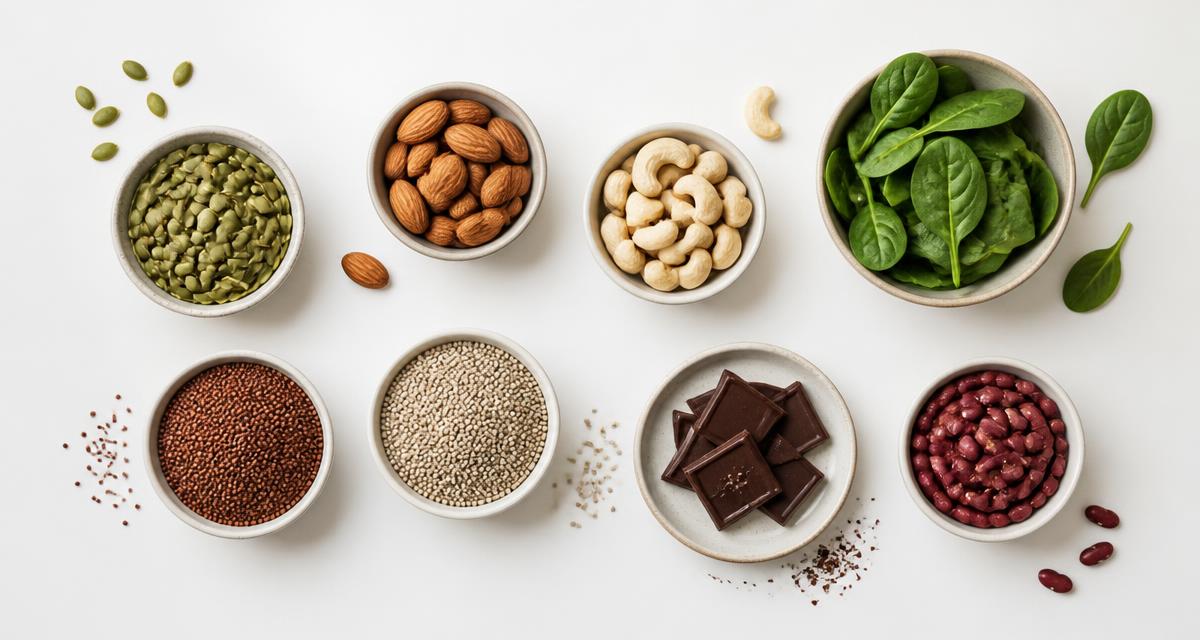
Magnesium runs more than 300 enzyme reactions, every unit of usable energy, every muscle relaxation, every calm night. Indian adults need roughly 310-370 mg a day, and most dietary surveys put us well under it. The fix starts in the kitchen. Here are the foods highest in magnesium that already exist in Indian cooking, what each serving actually delivers, and where food alone tends to fall short.
How much magnesium do you actually need?
- Adult men: ~370 mg/day (ICMR-NIN reference intake).
- Adult women: ~310 mg/day, higher in pregnancy and lactation.
- Higher need: heavy training, chronic stress, high sweat loss, diabetes, and long-term antacid or diuretic use.
A plain North Indian day of two wheat rotis, dal, sabzi and rice lands around 200-250 mg. Not disastrous, but a persistent 100 mg/day gap over years is exactly how tissue stores quietly drain.
The 15 highest-magnesium foods in an Indian kitchen
Values are typical published food-composition figures and vary with variety, soil and cooking method.
1. Pumpkin seeds (kaddu ke beej)
~150 mg / 30 g (2 tbsp)The single densest source in an Indian pantry. Roast lightly and add to chaas, poha or salads.
2. Chia seeds
~110 mg / 30 gAlso brings soluble fibre. Soak before eating, it improves both texture and mineral availability.
3. Almonds (badam)
~80 mg / 30 g (~23 nuts)Soaking overnight and slipping the skins reduces phytate load, the traditional Indian practice.
4. Cashews (kaju)
~82 mg / 30 gHigher in magnesium than most people assume, though calorie-dense, keep to a small handful.
5. Peanuts / groundnut
~50 mg / 30 gThe most affordable nut-class source in India. Boiled or roasted, not fried in reused oil.
6. Spinach (palak), cooked
~155 mg / 1 cupVery high on paper, but oxalates bind some of it. Still one of the best vegetable sources.
7. Methi and other leafy greens
~60-90 mg / 1 cup cookedRotate greens rather than relying on palak alone, different oxalate and mineral profiles.
8. Ragi (finger millet)
~137 mg / 100 g flourAlso the highest-calcium Indian grain. Ragi roti or ragi malt is an easy daily swap for maida.
9. Bajra (pearl millet)
~137 mg / 100 gA winter staple across Rajasthan, Gujarat and Maharashtra, and a genuine magnesium carrier.
10. Jowar (sorghum)
~165 mg / 100 gSwapping two wheat rotis a day for jowar meaningfully lifts weekly magnesium intake.
11. Rajma (kidney beans)
~75 mg / 1 cup cookedSoak 8 hours and discard the water, better digestion and better mineral availability.
12. Chana / kabuli chana
~78 mg / 1 cup cookedSprouted chana is a strong breakfast addition; sprouting cuts phytates substantially.
13. Moong dal
~97 mg / 1 cup cookedThe easiest dal to digest, which matters if bloating is what keeps you off legumes.
14. Dark chocolate (≥70%)
~65 mg / 30 gGenuinely useful, not a loophole. Keep the portion small and the sugar low.
15. Banana
~32 mg / 1 mediumModest per serving, but it is the fruit most Indians actually eat daily, it adds up.
A realistic 350 mg day (Indian meals, no special shopping)
- Breakfast - ragi porridge or two jowar rotis with sabzi. ~120 mg
- Mid-morning - 30 g soaked almonds + a banana. ~110 mg
- Lunch - moong dal, palak sabzi, one roti. ~120 mg
- Evening - 2 tbsp roasted pumpkin seeds or 20 g dark chocolate. ~60-150 mg
That clears the target. The honest problem is repeatability: this has to happen most days of most weeks, and travel, hostel food, canteen lunches and late nights break it quickly.
Why Indians stay short even while eating "healthy"
Refined grains replaced millets
Polishing rice and milling wheat into maida strips the magnesium-rich germ and bran. Two generations of that shift is the biggest single reason Indian magnesium intake fell.
Phytates in unsoaked grains and dals
Phytic acid binds magnesium in the gut. Soaking, sprouting and fermenting (idli, dosa, dhokla) release a meaningful share of it, which is exactly what traditional prep already did.
Tea and coffee with every meal
Tannins and the diuretic effect together reduce net mineral retention. Shifting chai to 45-60 minutes away from meals is a free improvement.
Antacids, PPIs and diuretics
Long-term proton-pump inhibitor use is a documented cause of low magnesium, and diuretics increase urinary loss. Both are very common in Indian adults over 40.
Depleted soil
Intensive farming with NPK-heavy fertiliser has reduced magnesium in produce. The same palak your grandmother ate is not the same palak by weight today.
Dietary magnesium vs. a supplement, what's actually different
Food magnesium arrives with fibre, potassium and polyphenols, and absorption sits around 30-40% depending on the meal's phytate and calcium load. A supplement removes the variability: a known amount, in a known chemical form, at a known time.
The catch is that the form decides the outcome. Magnesium oxide, the cheapest and most common filler on Indian shelves, is poorly absorbed and mostly acts as a laxative. Chelated and mineral-complex forms behave very differently in the gut. If you want the detail, read our India buyer's guide to magnesium forms, or check the nine signs of low magnesium first.
Mag Absorb Pro, for the gap food doesn't close
A blend of Aquamin® marine magnesium, magnesium bisglycinate, chloride and aspartate chosen for absorption rather than cost. No oxide filler, research-backed doses, third-party tested, made in a USFDA / GMP / FSSAI facility. Use it alongside the foods above, not instead of them.
The formulation behind this article
Mag Absorb Pro
Four magnesium forms for sleep, muscle recovery & calm
Aquamin® Marine Magnesium
100 mgForm used: Aquamin® marine-derived multi-mineral magnesium (branded, standardised extract)
Multi-mineral magnesium from red marine algae (Lithothamnion sp.), supports sustained mineral delivery for joint comfort, bone structure and recovery.
Magnesium Bisglycinate
200 mgForm used: Liposomal magnesium bisglycinate (fully reacted chelate, phospholipid-encapsulated)
Highly bioavailable, gentle-on-gut chelate, the gold standard for relaxation, sleep onset and stress recovery.
Food supplement, not a medicine. Ingredient research describes individual actives and their delivery forms, not finished-product outcomes. Consult a clinician if pregnant, lactating or on prescription medication.
References
Every in-text claim in this article is credited to the original researchers and peer-reviewed journal below. Key studies cited: Rosanoff A et al. (2012, Nutrition Reviews); de Baaij JH et al. (2015, Physiological Reviews); DiNicolantonio JJ et al. (2018, Open Heart).
- [1]
Suboptimal magnesium status in the United States: are the health consequences underestimated?
- Author(s)
- Rosanoff A, Weaver CM, Rude RK
- Year
- 2012
- Journal
- Nutrition Reviews
- Citation
- Rosanoff A, Weaver CM, Rude RK. Suboptimal magnesium status in the United States: are the health consequences underestimated? Nutr Rev. 2012;70(3):153-164.
- PubMed
- https://pubmed.ncbi.nlm.nih.gov/22364157/
- [2]
Magnesium in man: implications for health and disease
- Author(s)
- de Baaij JH, Hoenderop JG, Bindels RJ
- Year
- 2015
- Journal
- Physiological Reviews
- Citation
- de Baaij JH, Hoenderop JG, Bindels RJ. Magnesium in man: implications for health and disease. Physiol Rev. 2015;95(1):1-46.
- PubMed
- https://pubmed.ncbi.nlm.nih.gov/25540137/
- [3]
Subclinical magnesium deficiency: a principal driver of cardiovascular disease and a public health crisis
- Author(s)
- DiNicolantonio JJ, O'Keefe JH, Wilson W
- Year
- 2018
- Journal
- Open Heart
- Citation
- DiNicolantonio JJ, O'Keefe JH, Wilson W. Subclinical magnesium deficiency: a principal driver of cardiovascular disease and a public health crisis. Open Heart. 2018;5(1):e000668.
- PubMed
- https://pubmed.ncbi.nlm.nih.gov/29387426/
Citations follow AMA format. TruWe does not own or endorse the linked journals; all rights and credit remain with the original authors and their respective publishers.
Educational only, not medical advice or a diagnosis. Anyone with kidney disease should discuss magnesium intake with their doctor before supplementing.